Posts

The History of Tyres
Image
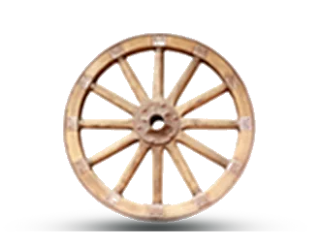
According to Wikipedia, the word tyre has been derived from the French word tirer meaning 'to pull'. Prior to the invention of pneumatic or air filled tyres, tyres were made up of bands of leather or iron placed on wooden wheels. This would protect the wheels of the carts and wagons from rapid wear and tear.Evolution of Rubber Tyres In the 1800's, Charles Macintosh experimented with sap from trees in Amazon area to create rubber. But, it could not withstand the weather extremities.        Charles Goodyear discovered vulcanised rubber in 1839, by adding sulphur, making it elastic and strong enough to be used as cushion tyres for cycles. It was in 1845 that pneumatic or air filled tyres were invented and patented by Robert William Thomson, a Scottish inventor. His design had multiple thin tubes inside a leather cover, so that the tyre could absorb shocks (see illustration) . But, it never really went into production due to its severe limitations.However, in 1888, John ...

Walk of life: Pakistani man travels 6,387 km on foot to perform hajj

Image
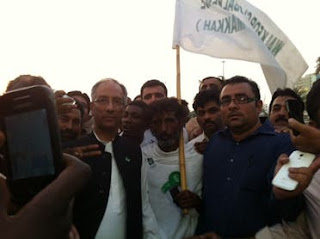
While most Muslims fly, drive or sail from across the world to perform the hajj in Makkah, a Pakistani man made the trip in a far more traditional manner; travelling on foot from Pakistan to Islam’s holiest city in Saudi Arabia. Kharlzada Kasrat Rai, 37, began his trip from Karachi on June 7, travelling 6,387 kilometers (3,968 miles) through Iran, Iraq and Jordan on foot. (Photo courtesy: Facebook) He arrived in Makkah on Oct. 1 to a hero’s welcome. Kasrat Rai was received by Saudi government officials and a representative of the holy Ka’aba’s imam in addition to members of Makkah’s Pakistani community and supporters from various Muslim countries.The two-time holder of the World Record for Peace Walks told Al Arabiya News that the aim behind his almost three-month journey was to deliver a “message of peace” to the world and to “condemn terrorism at all levels. “I want peace in the world, equality, and a union of the Muslim Ummah like the European Union,” he said. In 2007, he walked 1,9...

Briton Ben Hooper begins world-record attempt to swim across Atlantic Ocean

Image
After a delayed start, a former British policeman aiming to swim across the Atlantic finally set off Sunday from Senegal, bound for Brazil more than 1,900 miles (3,000km) away. “Here we go,” said 38-year-old Ben Hooper, as he tugged on his goggles and said goodbye to loved ones and supporters on the beach of a hotel in Hann Bay, in the east of Dakar. “To the whole world thank you very much for your support,” he said, before striding into the waves at the start of the record-breaking attempt, expected to take nearly five months.The father and former police officer from Gloucestershire was supposed to leave Africa’s western coast from Dakar, Senegal at the start of November but delayed his departure due to a problem with the support vessel. He postponed it again several times, until actually setting off on Sunday. He has been preparing for over three years for the immense journey that will see him swim up to 10 hours a day across the Atlantic. “It has been a long time coming,” he said.Ho...

How did the White House get its name?

Image
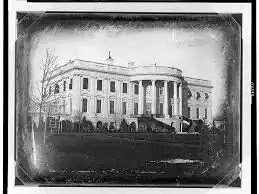
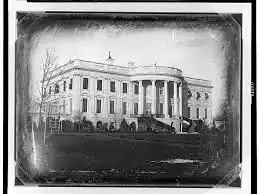
There is a popular misconception that the White House was first painted white to cover the scorch marks left by British soldierswho burned the house on August 24, 1814. In fact, the White House first received a lime-based whitewash in 1798 to protect its sandstone exterior from moisture and cracking during winter freezes. The term “White House” was occasionally used in newspapers and periodicals throughout the nineteenth century, but most journalists, citizens, and visitors referred to it as either the “President’s House” or the “Executive Mansion.” On October 17, 1901, President Theodore Roosevelt’s secretary George B. Cortelyou sent a letter to Secretary of State John Hay. At Roosevelt’s direction, Cortelyou asked Secretary Hay and his staff to change “the headings, or date lines, of all official papers and documents requiring his [Roosevelt’s] signature, from ‘Executive Mansion’ to ‘White House.’” Similar directives were sent to other cabinet secretaries, and Roosevelt...

Have any presidents or first ladies died at the White House?

Image
Two presidents and three first ladies have died at the White House. President William Henry Harrison died on April 4, 1841, just one month after his Inauguration.  Historians have long believed that Harrison died from pneumonia, but recent scholarship has suggested that he succumbed to enteric or typhoid fever.  also died at the White House on July 9, 1850, after suffering a stomach illness that was likely cholera or some other gastrointestinal illness. Three first ladies have died at the White House.  died on September 10, 1842 following a stroke.  died of tuberculosis on October 25, 1892. On August 6, 1914,  passed away after battling Bright’s Disease. Although Harrison and Taylor are the only two presidents to die at the White House,  (cardiovascular event/heart attack) and  (cerebral hemorrhage) also died in office. There were also four presidents who died by assassination—Abraham Lincoln, James Garfield, William McKinley, and John F. Kennedy. In t...

Russia-Ukraine war at a glance: what we know on day 401 of the invasion

Image
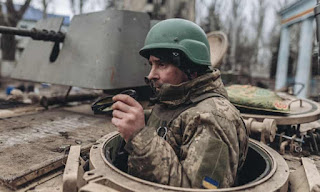
Ukraine will never forgive the Russian troops responsible for alleged atrocities in Bucha, Volodymyr Zelenskiy has said, as the town near Kyiv marked the anniversary of its recapture after 33 days of occupation in 2022. The leaders of Croatia, Slovakia and Slovenia travelled to Ukraine on Friday to take part in commemorative events, the Croatian government said. Turkey’s parliament has approved a bill to allow Finland to join Nato, clearing the way for Helsinki to join the western defence alliance. The Turkish parliament was the last among the 30 members of the alliance to ratify Finland’s membership, after Hungary’s legislature approved a similar bill this week. Sweden’s Nato bid faces objections from Ankara over claims it is harbouring what it considers members of terrorist groups. Alexander Lukashenko, the Belarusian president, has said he has intensified talks with Russia about deploying tactical nuclear weapons in his country, alleging there were plans to invade Belarus from neigh...

Woman who died after severe turbulence on a private jet was a former White House official.

Image
A former White House official died as a result of severe turbulence on a private business jet that was diverted Friday to Connecticut, according to authorities and the deceased woman's public resume. A Bombardier CL30 jet departing from Dillant-Hopkins Airport in Keene, New Hampshire, heading to Leesburg Executive Airport in Virginia was diverted to the Bradley International Airport in Windsor Locks around 4 p.m. Friday after "encountering severe turbulence," the Federal Aviation Administration wrote in a statement to CNN. That turbulence "resulted in fatal injuries" to one passenger, the National Transportation Safety Board wrote on Twitter. Three passengers and two crew members were onboard the private jet, the NTSB wrote in a statement to CNN. The conditions of the other people are not known. The person who died was Dana Hyde, Connecticut State Police said. She served for eight years in the Obama administration and was previously an official at the State Depa...

Islam's ban on alcohol and how it's applied.

Image
DOHA, Qatar -- Just two days before the World Cup opener, host nation Qatar banned the sale of beer at stadiums in a sudden U-turn that was criticized by some and welcomed by others. Qatari officials have long said they were eager to welcome soccer fans from around the world to the tournament but that visitors should also respect their culture and traditions. Alcohol consumption, impermissible in Islam, is one of the areas where the country has been attempting to strike a delicate balance. Here’s a look at some of the issues related to alcohol and Muslim beliefs. WHAT DOES THE QURAN SAY ABOUT ALCOHOL? Drinking alcohol is considered haram, or forbidden, in Islam. As proof of the prohibition, Islamic scholars and Muslim religious authorities typically point to a verse in the Quran, the Muslim holy book, that calls intoxicants “the work of Satan” and tells believers to avoid them. Additionally, they cite sayings of Prophet Muhammad and the negative effects that alcohol can have. Beyond ab...

End of World War II in Europe

Image
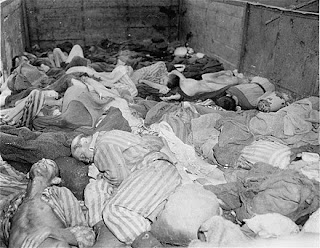
The last battles of the European Theatre of World War ² continued after the definitive overall surrender of Nazi Germany to the Allies, signed by Field marshal Wilhelm Keitel on 8 May 1945 in Karlshorst, Berlin. After German dictator Adolf Hitler's suicide and handing over of power to grand admiral Karl Dönitz in May of 1945, the Soviet troops conquered Berlin and accepted surrender of the Dönitz-led government. The last battles were fought as part of the Eastern Front which ended in the total surrender of all of Nazi Germany’s remaining armed forces such as in the Courland Pocket in western Latvia from Army Group Courland in the Baltics surrendering on 10 May 1945 and in Czechoslovakia during the Prague offensive on 11 May 1945.Red Army soldiers from the 322nd Rifle Division liberated Auschwitz concentration camp on 27 January 1945 at 15:00. Two hundred and thirty-one Red Army soldiers died in the fighting around Monowitz concentration camp, Birkenau, and Auschwitz I, as well as t...

Sweden during World War II

Image
Sweden maintained its policy of neutrality during World War II. When the war began on 1 September 1939, the fate of Sweden was unclear. But by a combination of its geopolitical location in the Scandinavian Peninsula, realpolitik maneuvering during an unpredictable course of events, and a dedicated military build-up after 1942, Sweden kept its official neutrality status throughout the war. At the outbreak of hostilities, Sweden had held a neutral stance in international relations for more than a century, since the end of the Napoleonic Wars in 1814 and the invasion of Norway.At the outbreak of war in September 1939, twenty European nations were neutral. Sweden was one of only nine of these nations to maintain this stance for the remainder of the war, along with Ireland, Portugal, Spain, Switzerland, and the microstates of Andorra, Liechtenstein, Vatican City, and San Marino. The Swedish Government made a few concessions, and sometimes breached the nation's neutrality in favor of bot...

Circumcision indecision: The ongoing saga of the world’s most popular surgery

Image
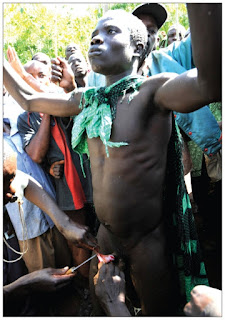
Imagine you were given the task of concocting a controversial topic from scratch. You would probably throw in some religion, add a dash of politics and, to really spice things up, include a heaping portion of sex. To help generate heated debate, you could also sprinkle a few human rights issues on it. Next stir in a whole pot of health claims — some sound, some spurious (just to keep things interesting). Oh, and it couldn’t hurt to somehow work helpless babies into the mix to get parents all riled up. Well, you don’t need to create that topic. It already exists. It’s called circumcision. And just because it is the most commonly performed surgical procedure in human history doesn’t mean people have reached a consensus on the health benefits of slicing off foreskins. Far from it. About a third of the world’s males aged 15 years and older are circumcised, according to the World Health Organisation. Most undergo the procedure for religious reasons: 68.8% of the world’s circumcised men are ...

World War II

Image
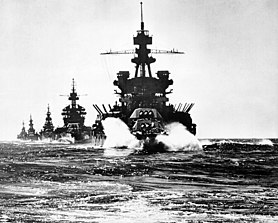
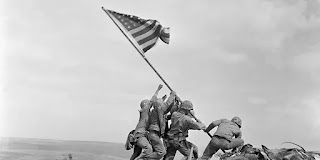
World War II or the Second World War, often abbreviated as WWII or WW2, was a global conflict that lasted from 1939 to 1945. The vast majority of the world's countries, including all of the great powers, fought as part of two opposing military alliances: the Allies and the Axis. Many participants threw their economic, industrial, and scientific capabilities behind this total war, blurring the distinction between civilian and military resources. Aircraft played a major role, enabling the strategic bombing of population centres and the delivery of the only two nuclear weapons ever used in war. World War II was by far the deadliest conflict in history; it resulted in an estimated 70 to 85 million fatalities, mostly among civilians. Tens of millions died due to genocides (including the Holocaust), starvation, massacres, and disease. In the wake of the A...

The Largest Trees in the World

Image
The mid-sierra zone (5,000-8,000 ft or 1,524-2,438 m) creates ideal conditions for giant sequoia growth. Mild winter and summer temperatures, deep winter snowpack, and a rich fire history have made it possible for the world's largest tree to get its biggest in these parks. Sequoia and Kings Canyon National Parks boast many of the world's largest trees by volume. The General Sherman Tree is the largest in the world at 52,508 cubic feet (1,487 cubic meters). The General Grant Tree is the second largest at 46,608 cubic feet (1,320 cubic meters). It is difficult to appreciate the size of the giant sequoias because neighboring trees are so large. The largest of the sequoias are as tall as an average 26-story building, and their diameters at the base exceed the width of many city streets. As they continue to grow, they produce about 40 cubic feet (one cubic meter) of wood each year, approximately equal to the volume of a tree that's 50 feet (15 meters) tall and one foot in diamet...

How Did the United States Become a Global Power?

Image
With the world’s largest economy, hundreds of overseas military bases, and leadership positions in various international institutions, the United States is an undeniable global power. The U.S. government is not transparent about the location of all of its overseas military bases, but this map shows bases with confirmed coordinates as of May 2020.But this was not always the case. For much of the country’s history, presidents shielded the nation from international affairs. The first U.S. president, George Washington, declared in his farewell address, “It is our true policy to steer clear of permanent alliance with any portion of the foreign world.” In particular, he feared the consequences of involving the United States in Europe’s great power conflicts. Instead, early American leaders focused on developing the young nation’s economy, expanding domestic territory, and getting Europe’s imperial powers to withdraw from the Western Hemisphere. In their worldview, the Atlantic and Pacific oc...

Great Wall of China

Image
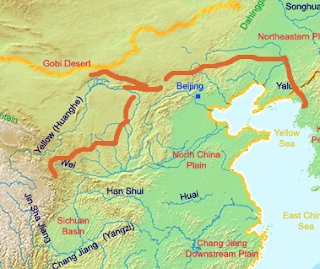
The great wall is a series of fortifications that were built across the historical northern borders of ancient Chinese states and Imperial China as protection against various nomadic groups from the Eurasian Steppe. Several walls were built from as early as the 7th century BC,[4] with selective stretches later joined by Qin Shi Huang (220–206 BC), the first emperor of China. Little of the Qin wall remains.[5] Later on, many successive dynasties built and maintained multiple stretches of border walls. The best-known sections of the wall were built by the Ming dynasty (1368–1644). Apart from defense, other purposes of the Great Wall have included border controls, allowing the imposition of duties on goods transported along the Silk Road, regulation or encouragement of trade and the control of immigration and emigration. The Chinese were already familiar with the techniques of wall-building by the time of the Spring and Autumn period between the 8th and 5th centuries BC.[22] During this t...

Croatian War of Independence

Image
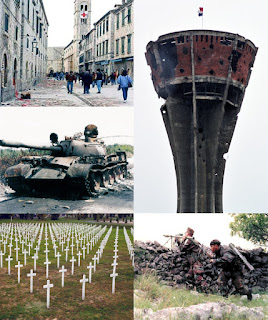
The Croatian War of Independence was fought from 1991 to 1995 between Croat forces loyal to the Government of Croatia—which had declared independence from the Socialist Federal Republic of Yugoslavia (SFRY)—and the Serb-controlled Yugoslav People's Army (JNA) and local Serb forces, with the JNA ending its combat operations in Croatia by 1992. In Croatia, the war is primarily referred to as the "Homeland War" (Croatian: Domovinski rat) and also as the "Greater-Serbian Aggression" (Croatian: Velikosrpska agresija).[25][26] In Serbian sources, "War in Croatia" (Serbian Cyrillic: Рат у Хрватској, romanized: Rat u Hrvatskoj) and (rarely) "War in Krajina" (Serbian Cyrillic: Рат у Крајини, romanized: Rat u Krajini) are used. A majority of Croats wanted Croatia to leave Yugoslavia and become a sovereign country, while many ethnic Serbs living in Croatia, supported by Serbia, opposed the secession and wanted Serb-claimed lands to be in a common state ...

History of Nicéphore Niépce

Image
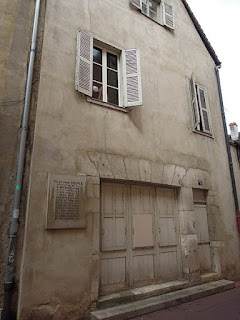
Joseph Nicéphore Niépce (French: [nisefɔʁ njɛps]; 7 March 1765 – 5 July 1833), commonly known or referred to simply as Nicéphore Niépce, was a French inventor, usually credited with the invention of photography. Niépce developed heliography, a technique he used to create the world's oldest surviving product of a photographic process: a print made from a photoengraved printing plate in 1825. In 1826 or 1827, he used a primitive camera to produce the oldest surviving photograph of a real-world scene. Among Niépce's other inventions was the Pyréolophore, one of the world's first internal combustion engines, which he conceived, created, and developed with his older brother Claude Niépce. Niépce was born in Chalon-sur-Saône, Saône-et-Loire, where his father was a wealthy lawyer. His older brother Claude (1763–1828) was also his collaborator in research and invention, but died half-mad and destitute in England, having squandered the family wealth in pursuit of non-opportunities f...

History of Alexander Graham Bell

Image
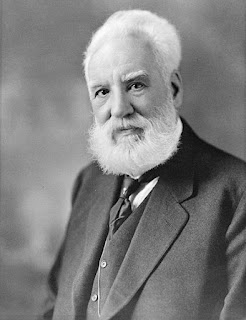
Alexander Graham Bell (/ˈɡreɪ.əm/, born Alexander Bell; March 3, 1847 – August 2, 1922) was a Scottish-born  inventor, scientist and engineer who is credited with patenting the first practical telephone. He also co-founded the American Telephone and Telegraph Company (AT&T) in 1885.Bell's father, grandfather, and brother had all been associated with work on elocution and speech, and both his mother and wife were deaf; profoundly influencing Bell's life's work. His research on hearing and speech further led him to experiment with hearing devices which eventually culminated in Bell being awarded the first U.S. patent for the telephone, on March 7, 1876. Bell considered his invention an intrusion on his real work as a scientist and refused to have a telephone in his study. Many other inventions marked Bell's later life, including groundbreaking work in optical telecommunications, hydrofoils, and aeronautics. Bell also had a strong influence on the National Geographic ...

History of Samuel Colt

Image
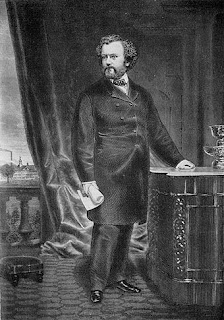
Samuel Colt (/koʊlt/; July 19, 1814 – January 10, 1862) was an American inventor, industrialist, and businessman who established Colt's Patent Fire-Arms Manufacturing Company (now Colt's Manufacturing Company) and made the mass production of revolvers commercially viable.Colt's first two business ventures were producing firearms in Paterson, New Jersey, and making underwater mines; both ended in disappointment. His business affairs improved rapidly after 1847, when the Texas Rangers ordered 1,000 revolvers during the American war with Mexico. Later, his firearms were used widely during the settling of the western frontier. Colt died in 1862 as one of the wealthiest men in America. Colt's manufacturing methods were sophisticated. His use of interchangeable parts helped him become one of the first to use the assembly line efficiently. Moreover, his innovative use of art, celebrity endorsements, and corporate gifts to promote his wares made him a pioneer of advertising, pr...